
Carbon removal’s default destiny is playing out as expected (but it can be changed)
From what I’ve seen in recent years, there is a kind of sweet spot for climate solutions becoming twisted into tools of climate delay. A sort of goldilocks zone for counterproductive technologies. They should, by default:
- Not cause any (or only cause minimal) change in fossil fuel production, combustion or infrastructure
- Be technologically possible (and demonstrable) but practically infeasible / difficult and expensive
- Have enough noise and activity in the research and development side, so a breakthrough feels imminent
You’ve got a few racing through your mind already, right? But I want to talk first about capture of carbon that occurs at the point of carbon dioxide release, mostly when it relates to fossil fuel extraction, processing or combustion. This is what you mostly would have known as ‘CCS’.
It is truly the elder statesman of climate delay. As I wrote here, it’s become a sort of mantra used during fossil fuel development to make the dream of an unchanged fossil fuel economy real – for regulators, investors and the general public; far removed from any technological discussion of the machines that fall under the umbrella term.
The second part of the trick is really important: DO NOT ACTUALLY BUILD IT. At least, not at any scale that meaningfully stops our home heating. Fossil CCS exists, but it’s slow and expensive enough that fossil companies can perpetually delay, even while hoovering up subsidies. If the mere act of repeatedly mentioning CCS has already done the job of getting your carbon bomb project approved, why the hell would a company spend all that money actually building it? That money would be far better served paying for the Maserati in the driveway of the CEO.
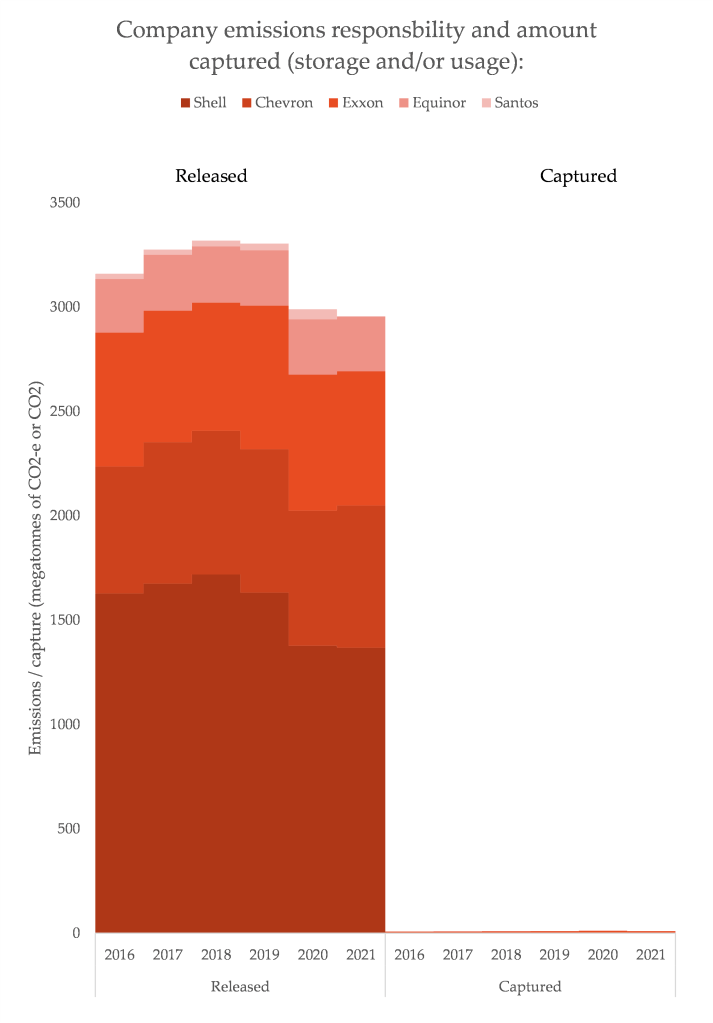
Interestingly, in the US, a proposed law calls the bluff and sets CCS as a requirement. In response utilities lost their absolute minds and are fighting like hell to oppose the technology they once supported, back when it was a hollow promise used to greenwash their deadly, dangerous and old power generation machines.
Fossil CCS isn’t alone in the climate delay goldilocks zone. We also see:
- Hydrogen made using fossil fuels and CCS (to be pumped into gas networks, or used in cars, or other VERY bad ideas)
- “Renewable” (augh) “natural” (aaugggghh) gas
- Biofuels (eg – Exxon’s comical obsession with aglae)
- Synthetic fuels
- Geoengineering (trying to engineer the atmosphere so it cools instead of warming)
Fossil companies turn up the dial on these half-hearted profferings in their reports, speeches, social media and statements, using them as empty promises to win another few years for their planet-wrecking products. All of them have some narrow application and value, but that just gets absolutely obliterated by a tsunami of greenwashing madness.
A significant member on this list has been getting plenty of attention recently: machines that remove carbon from the air around us.
Carbon removal – an extra, not an A-list actor
The act of sucking carbon from air can be done by vegetation, or by machine. Trees can be grown to capture carbon, but that carbon is vulnerable to re-release in fires or land-use change. Cut the tree down and burn it, or char it, and you can then store that burned or charred carbon underground. Alternatively, a machine can suck in air, and then use fancy chemistry to unmix the small amount of carbon dioxide in that air, and then that can be stored (as a gas, or a solid) (“direct air capture”, or DAC).
Unmixing the atmospheric milkshake is difficult. Natural methods are extremely land intensive, and hard to quantify. Technological methods, like DAC, are extremely energy intensive, and currently quite expensive. (This is why ‘thanking’ fossil fuels for providing us with plentiful energy drives me up the wall – if we want to undo the harm that came packaged with, we have to literally pay that energy back with A LOT of interest).
To put it simply: it is fundamentally impossible to just continue growing emissions as per normal, and remove it afterwards. There is a cool model called ‘En-Roads’ that lets you turn knobs on a climate model simulation, and I’ve used it to create an illustration of an important point.
Our climate fate hinges on whether or not we reduce emissions, not on whether we remove carbon from the atmosphere. Removals are the epilogue, not the body text. They are a background extra, not the lead role. I can’t think of any more metaphors, so hopefully you get it.
In a world where we do maximum technological removal and no reductions, we’re still mostly screwed. In the world where we only do maximum reductions and no removals, things are way, way less bad:
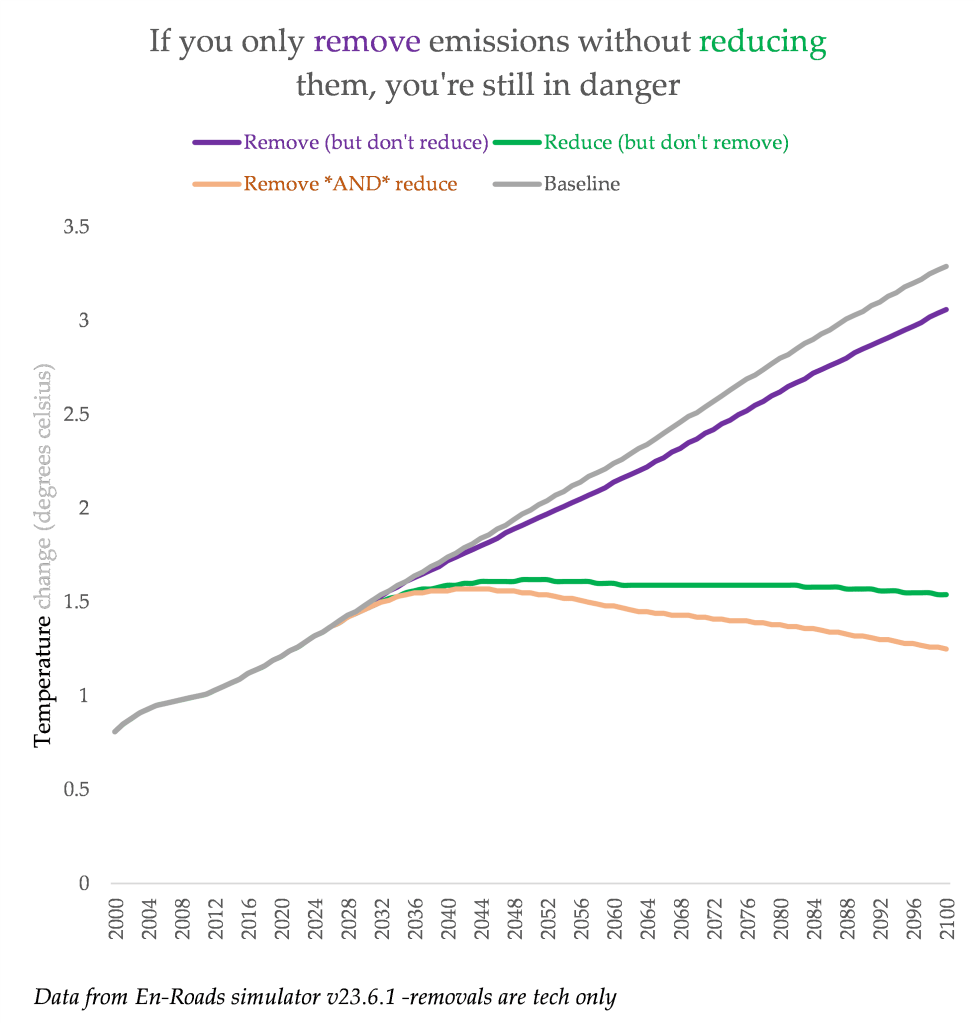
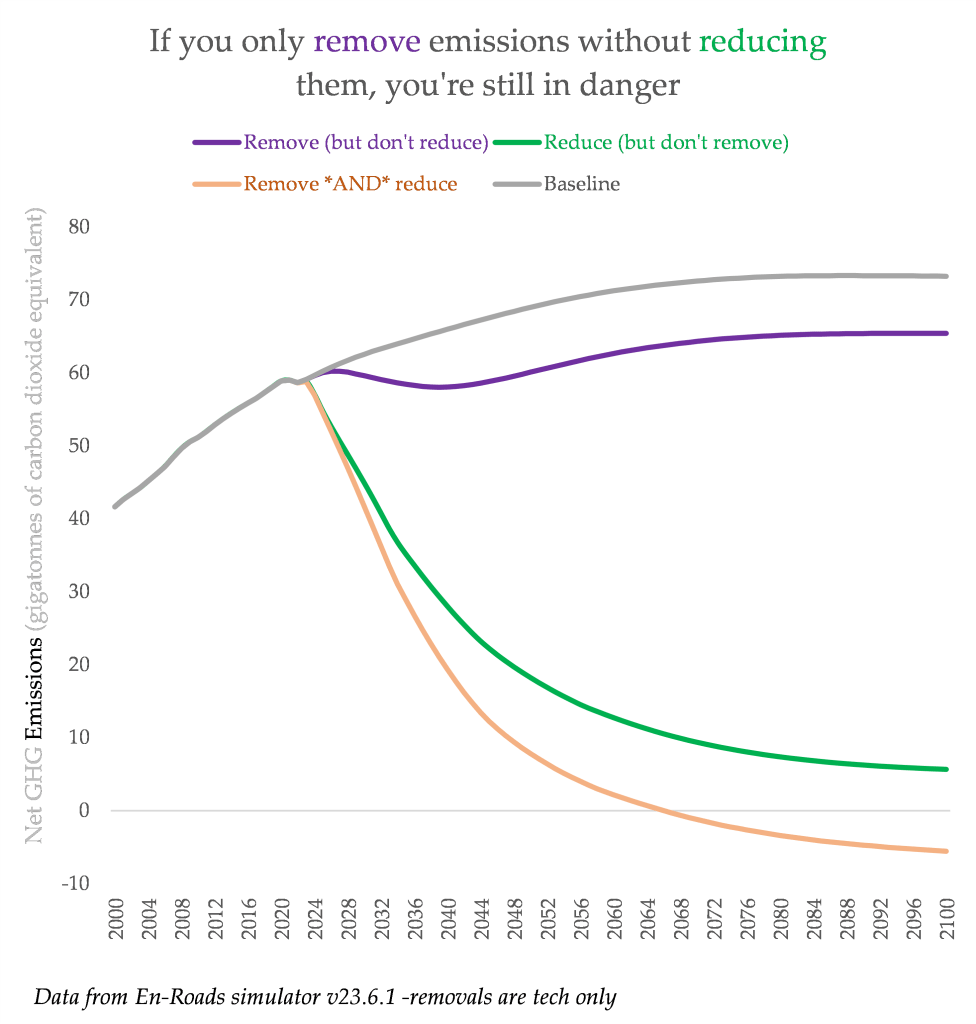
Scenario links: High removals, High reductions, Both high
This isn’t two equally weighted avenues of climate resolution. The avoided impacts for not emitting are far, far higher than the potential for emitting and then desperately scraping it back underground. Both are “needed”, but reductions are needed several times more desperately and urgently than removals.
This is why it matters so much if carbon removal is developed in a way that becomes a new brake on emissions reductions.
Occidental knows a climate delay tool when it sees one
Occidental Petroleum are a large oil and gas company based in Texas, USA. Their investor deck lays out their vision of carbon removal – one which we do far less mitigation and far more removals than the maxed-out modelling above. In their view, emissions in 2050 remain around two thirds of what they are today, and carbon removal is a few times larger than what most reasonable models max out at.
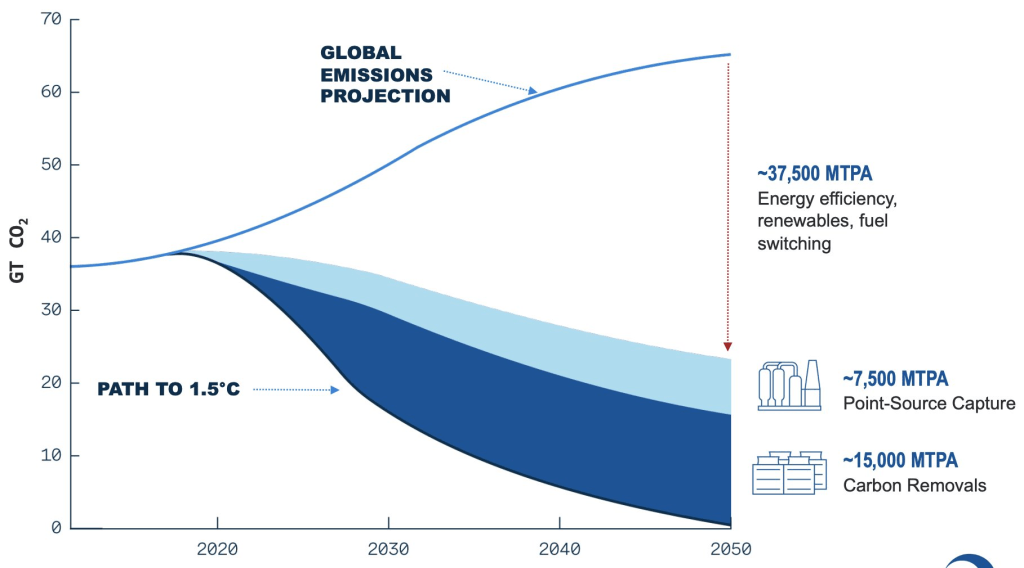
Zeke Hausfather, a climate scientists working at Stripe on carbon removal efforts, is sort of unimpressed with Occidental’s vision:
“It is critical that proponents of carbon removal not oversell its potential, and anything with < 90% removals and > 10% CDR is a bit worrying. CDR is not a replacement for deep emissions reductions, and anyone who says differently is selling something”
Occidental Petroleum sure is selling something: a shitload of oil and gas. They’re the fourth biggest producer in the US, and 24th biggest in the world.
And they’re unambiguous about their plan to use carbon removal as a tool to ensure they keep selling oil and gas. Here are some choice quotes from the CEO of Occidental Petroleum, Vicki Hollub:
“We can’t stop oil today. We can’t stop oil in the next 10 to 20 to 30 years, and in fact, we don’t need to ever stop oil because it’s really about emissions, it’s not about the fuel source”
– source
“We believe that our direct capture technology is going to be the technology that helps to preserve our industry over time..this gives our industry a licence to continue to operate for the 60, 70, 80 years that I think it’s going to be very much needed”
– source
In response to a question on how Hollub responds to accusations CDR is greenwashing being used to extend the life oil:
“I would say that’s true. It’s true. Because what we need to do is: We need to extend the life of oil production, because it’s the most intensive energy source. And so we need to do it for the world. It makes the world a better place” – source
The core way this happens is by selling “net zero oil” – that’s normal oil, but with some additional claim of climate mitigation. They are already selling fossil fuels using carbon removal branding: about this time last year they announced a pre-purchase deal for this greenwashed fossil fuel product.
Generally, ‘net zero’ fossil products happens in a few ways:
- They sell the oil, and buy dodgy carbon offsets to falsely claim it’s ‘net zero’ (happening for years now)
- They sell the same product but “offset” using their own carbon removal machines
- They use carbon that they capture to manufacture synthetic fuels, which re-release the carbon when burned, leading to no net benefit
- They inject the carbon they’ve captured into mostly-depleted oil reservoirs to dislodge ven more oil, and insist that this somehow works out to ‘net zero’
Importantly, none of these activities end up being true ‘carbon removal’. In the best case, they use direct air capture to cancel out or ‘neutralise’ emissions – that is, nothing is actually removed from the atmosphere, it’s just kept at a balance of current emissions.
It’s like saying you’re cleaning up the beach, but dropping down one new plastic wrapper on the sand for every one you pick up and put into a trash bag. At best – assuming everything always works perfectly and they’re being fully honest – Occidental Petroleum are trash neutral.
Occidental Petroleum just announced they’re buying up Carbon Engineering, the removal company they’ve partnered with extensively. Back in 2018, Carbon Engineering’s founder David Keith said:
“Job one has to be not emitting the CO2..the first rule of holes; you stop digging. We need to do that first, before we imagine that we are going to fix the hole by filling it back in somehow”
and in 2021 said:
“I don’t think Carbon Removal should be deployed at scale until emissions have been driven a long way down”.
Nicely expressed, but a view obviously not existing within Carbon Engineering, a company that will now be dedicated to helping Occidental Petroleum sell more fossil fuels. Extra-baffling here is the fact that Occidental are getting a US government subsidy for their direct air capture hub. The oil company saw a 700% increase in profits from selling fossil fuels, from 2021 to 2022. Between 2020 and 2022, they spent an average of $484m USD searching for new oil and gas reserves. As of September 2022, they have 1,585 million barrels of oil equivalent in oil and gas under development.
Their sole intention is to profit from worsening the climate problem, and the company is using direct air capture as a stepping stone towards that goal. They are not the only one.
DAC is rapidly becoming a tool for facilitating continued emissions growth
Occidental’s third-biggest fossil financier is JP Morgan chase. They are, would you believe, also the second largest purchaser of carbon removal to date. Guess who just announced a massive investment into carbon removal and a huge new purchase of carbon removal credits to negate the company’s ongoing emissions?
As EENews reports, “At least seven oil and gas producers — including more than half of the world’s oil majors — are working on direct air capture projects or have financially supported DAC companies, which can collect up to $180 for each ton of carbon dioxide they sequester”. ExxonMobil’s CEO describes DAC as the ‘holy grail’, and recently paid $5b bucks to buy an operator of carbon transport pipelines Exxon’s CEO said the purchase “gives us the opportunity to play an even greater role in a thoughtful energy transition”. He’s thinking about it, alright. ADNOC, the nationalised fossil fuel company owned by the UAE, much-criticised hosts of COP28, announced a deal with Occidental to look into DAC hubs – ADNOC are also expanding fossil fuel production.
The bigger problem is less obvious, but I would argue much more damaging.
Companies providing carbon removal plan to sell ‘credits‘ into the existing carbon offset marketplaces – allowing one unit of pollution to be emitted off the back of that removal. Everyone involved verbally insists that this is no substitute for emissions reductions, but that has no impact on to who the credits get sold. This brazen lack of customer scrutiny has been a core problem in carbon markets for decades and decades.
Shopify, one of the biggest buyers of carbon removal credits, buys them largely to justify a special business program incentivising business travel, along with the carbon footprint of massive click-frenzy sales encouraging mass consumerism. As mentioned above, JP Morgan Chase, the single largest financier of fossil fuels since the Paris agreement, is the 2nd largest buyer of carbon removals by volume, purely to “neutralise” easiest-to-abate power sector emissions in their footprint.
Another good example of this problem is CDR provider Charm Industrial, who allow you to purchase ‘CDR credits’ for essentially whatever you want:

“As a company, remove carbon dioxide to offset your company’s supply chain and employee emissions”. Or, “Permanently remove carbon dioxide to offset your household’s emissions”. Of course, you promise to only remove ‘hard to abate’ emissions from the cement production line in your lounge room, right?
The biggest buyer so far is Microsoft, whose emissions have risen year-on-year (if you account for their actual electricity consumption). They bought the same tonnes of removals the Danish government has procured from state-owned renewable energy company Ørsted. Not only removals to cover up rising emissions – double-counting, to boot.
There is a massive pre-purchasing frenzy happening right now. In 2020, about 70% of the removals purchased were delivered. In 2023, to date, 7% of removals purchased have been delivered (almost entirely from ‘biochar’, which is superheating trees so they turn to solid carbon without combusting them as fuel – think that shiny black stuff on the pizza you burned in the oven).
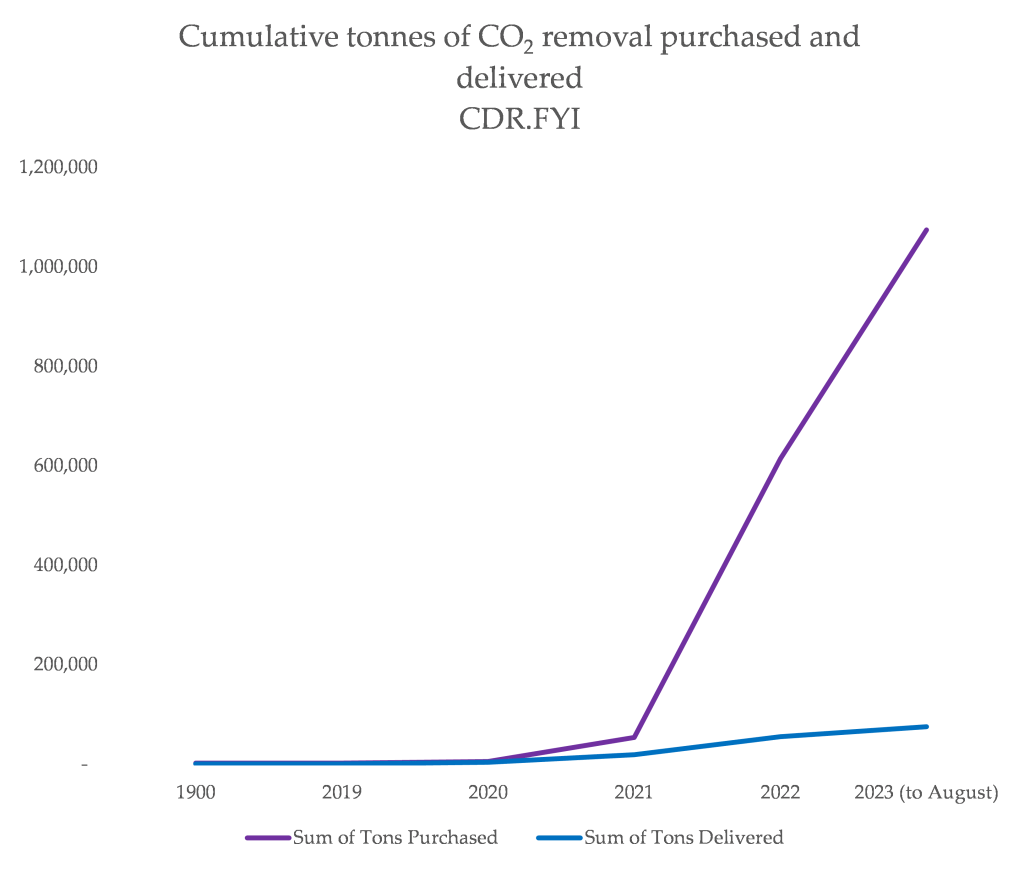
That’s a decent amount of cash flowing towards emerging companies. Carbon removal is expanding rapidly, but without the guardrails in place to ensure it doesn’t become a system of climate delay and a rhetorical tool to excuse ongoing emissions. Selling carbon removal to excuse ongoing and worsening emissions is already the norm.
Through direct ownership and partnerships with fossil companies, and the indiscriminate and unchecked sale of emissions permissions to the worst, most shameless polluters, carbon removal is taking the bad path. Without a major change that explicitly disallows these forms of climate delay, it’ll probably end up doing much more harm than good.
It’s pretty simple: don’t let carbon removal excuse ongoing or worsening emissions. That means no deal with fossil fuel majors. And if you really must sell carbon credits, here’s my idea: they can only apply to the earliest emissions first. Once we’ve dealt with the ~2,500 ish human-added CO2 gigatonnes in the atmosphere, THEN you can apply credits to new emissions. We go from oldest to newest, not from newest to oldest.
As it happens, a study just came out examining the earliest use of coal, about 3,600 years in the past. “Here, we report comprehensive understanding for the earliest systematic exploitation of coal for fuel at the Jirentaigoukou site in Xinjiang, northwestern China”. So, really, the first DAC credits should go to those folks, right? And then, we can work our way through the last millenium.

I’m half joking, but this’d be a good test, right? Who’s in it to help the climate, and who’s in it to make a buck, or to facilitate fossil fuels?
Carbon removal sits among CCS, fossil hydrogen, geoengineering and synthetic fuels as technologies that inherently skew towards being used nefariously, by bad actors seeking to feign action while creating destruction. Yet it gets treated as if it’s as neutral as wind and solar. That isn’t true, and we’re seeing that play out in the worst possible way.
 Ketan Joshi